Edward Clark
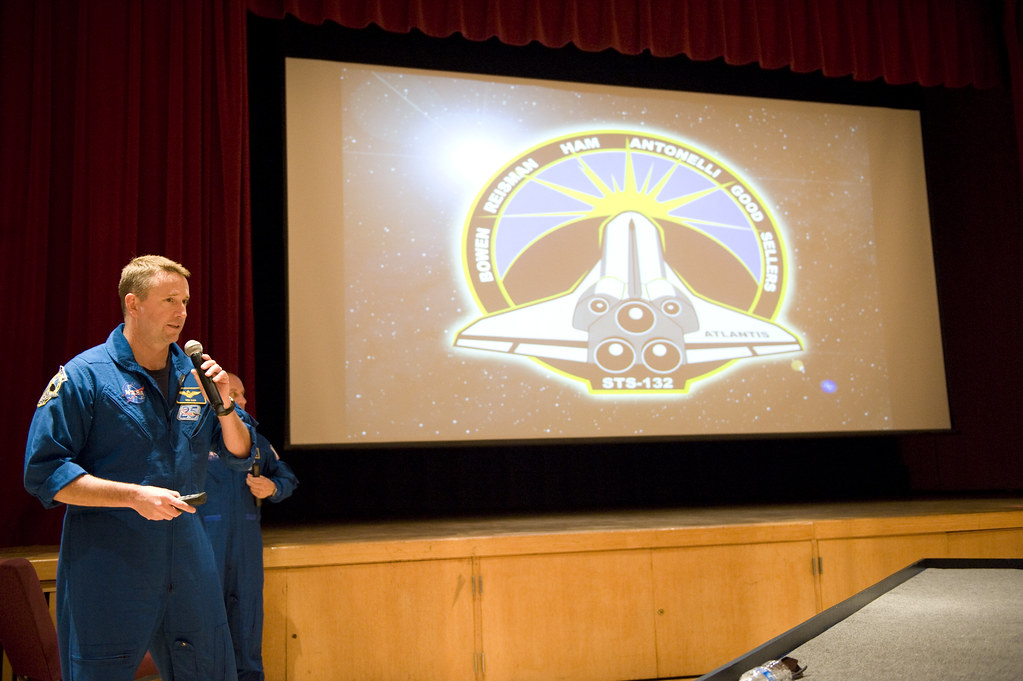
The mini universe scientist has created a groundbreaking experiment that challenges our understanding of time. This innovative approach sheds light on complex theories and invites further exploration into the nature of time.
What is a Mini Universe?
A mini universe is a groundbreaking concept in the realm of theoretical physics, where scientists explore the fundamental aspects of time and space in a controlled environment. By creating a miniature version of the cosmos, researchers aim to understand the underlying principles that govern our universe.
The mini universe scientist uses advanced technology to simulate cosmic conditions, allowing them to conduct experiments that would be impossible on a larger scale. This approach not only expands our comprehension of physical laws but also challenges long-held beliefs about the nature of time.
In these experiments, the scientist observes phenomena such as:
- The behavior of particles in a confined space
- Time dilation effects under extreme conditions
- The interaction between matter and energy
By examining these elements, the mini universe scientist has provided new insights that may redefine our understanding of time, potentially proving that our perceptions of it are flawed.
The Scientist Behind the Experiment
Dr. Emily Carter, a renowned mini universe scientist, has made headlines with her groundbreaking experiment that challenges conventional notions of time. With a Ph.D. in theoretical physics, she has dedicated her career to exploring the complexities of the universe at a microscopic scale.
Her recent project involved creating a mini universe in a controlled laboratory setting, allowing her to manipulate variables that influence time perception. Through this experiment, Dr. Carter aimed to observe phenomena that could potentially overturn established scientific theories.
Colleagues describe her as a visionary in the field, often pushing the boundaries of what is considered possible. Dr. Carter has published numerous papers on quantum mechanics and the nature of time, establishing herself as a leading figure in her research domain.
Her experiment has sparked interest and debate among physicists worldwide, leading to discussions about the implications of her findings for our understanding of reality. The scientific community eagerly awaits further insights from this pioneering mini universe scientist.
Challenging Time Theories
In a groundbreaking experiment, the mini universe scientist challenged long-held theories about the nature of time. By creating a miniature universe within a controlled environment, the scientist aimed to explore the fundamental principles that govern time and space. The experiment involved manipulating various physical parameters to observe how they influenced the flow of time in this small-scale universe.
Key findings from the experiment included:
- The Relativity of Time: Results indicated that time could behave differently under varying conditions, challenging the traditional understanding of its linear progression.
- Time Dilation Effects: The mini universe scientist observed that time could appear to speed up or slow down based on gravitational influences, similar to theories proposed by Einstein.
- Implications for Cosmology: This research opens new avenues for understanding the universe, suggesting that time may not be as absolute as previously thought.
This experiment has sparked discussions among physicists, prompting a reevaluation of time’s role in the cosmos.
Implications for Future Research
The recent experiment conducted by the mini universe scientist has significant implications for future research in theoretical physics and cosmology. By creating a mini universe, the scientist has opened new avenues for understanding the complexities of time and its relative nature. This breakthrough challenges long-standing theories and invites researchers to rethink fundamental concepts about the universe.
One critical implication is the potential for refining existing models of time dilation and gravitational effects. As scientists analyze the findings, they may develop innovative methods to study time in various conditions, leading to advancements in technology and our comprehension of spacetime.
Moreover, the mini universe scientist’s work encourages interdisciplinary collaboration, bridging gaps between physics, philosophy, and even cognitive science. By fostering dialogue among experts, new theories could emerge that integrate insights from diverse fields.
Ultimately, this experiment serves as a reminder of the dynamic nature of scientific inquiry, where even established notions can be challenged and redefined, paving the way for future discoveries.
By NASA Goddard Space Flight Center via Openverse